
News release | 03-02-2026 | 14:00
The Dutch Food and Consumer Product Safety Authority (NVWA) conducted 71 inspections in 2024 and 2025 of cut‑flower production under glass in the Netherlands. The findings show that compliance with pesticide application rules by growers has not improved. Only 39 % of the inspected growers adhered to plant‑protection legislation. This represents a sharp decline compared with 2019, when compliance stood at 60 %. The NVWA finds these figures worrisome.
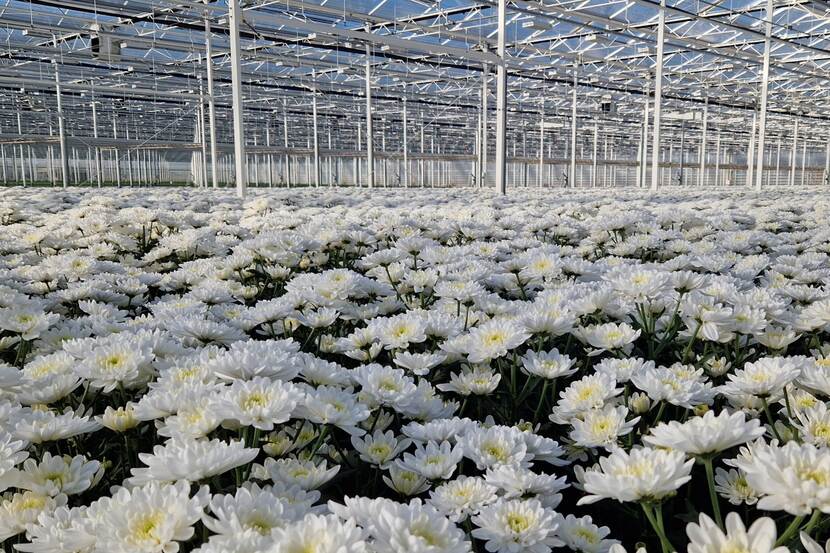
The NVWA inspected the cultivation of, among others, chrysanthemum, freesia, hydrangea and rose. The 71 Dutch companies were randomly selected. The NVWA identified violations at 43 of the 71 companies, leading to fines or warnings in the case of less serious infringements. Most growers erred by using authorised substances incorrectly, for example applying doses that were too high, performing too many applications, or using them in the wrong period. At seven growers the use of substances not authorised for the crop was detected.
Risks for humans, animals and the environment
Incorrect use of plant‑protection products and the use of unauthorised substances can pose risks to humans, animals and the environment. The recently published report of the Risk Assessment & Research Bureau (BuRO) of the NVWA on imported roses and cut flowers from non‑EU countries underlines this. The report concludes that the presence of unauthorised residues can pose a risk to people who work professionally with these roses, and potential environmental risks when roses enter the environment via green waste or compost. Which risks excessive dosages or overly frequent applications of authorised substances may entail is not yet clear. Follow‑up research is therefore necessary.
Follow‑up approach
To raise compliance, the NVWA is acting on several fronts. Since 2021 two pilots have been running in ornamental horticulture to increase compliance. In the first pilot, heavier sanctions are imposed on companies that repeatedly commit violations. The second pilot, “stimulating supervision”, encourages growers in the ornamental sector to work on the basis of integrated pest management. Both pilots are not part of the compliance measurement for 2024‑2025.
In addition, the NVWA is exploring options to enforce the rules more strictly within ornamental horticulture. Examples include expanding the public disclosure of inspection results and increasing cooperation with other supervisory bodies. The NVWA also continues to call for adjustments to the sanction instrumentarium. For growers that do comply well, the NVWA is investigating a more targeted chain approach.
In dialogue
Regarding the inspection results and the approach, the NVWA is in discussion with sector representatives, the College for the Approval of Plant Protection Products and Biocides (Ctgb), the Ministry of Agriculture, Fisheries, Food Security and Nature (LVVN), the Ministry of Infrastructure and Water Management (I&W), and other supervisory authorities such as the water boards and environmental agencies.
Inspection results
View the full inspection results for pesticide application in cut flowers 2024 and 2025.
More information
Consumers and companies can contact our Customer Contact Centre. Journalists may direct questions about this news release to our press officers.